Running a small ecommerce business means making difficult decisions about what to sell, whom to target, and where to spend limited marketing dollars. Expanding your catalogue might seem like the obvious way to reach more customers, but every new product brings additional work, from sourcing and inventory management to product photography, listings, and promotion.
There is another approach: offer meaningful variations of products you already sell.
A different color, pattern, bundle, or combination of accessories can appeal to someone whose preferences aren't served by your existing options. For Shopify store owners, dropshippers, and bootstrapped ecommerce teams, this creates an opportunity to serve different customer segments without necessarily building an entirely new product line.
BURGA's iPhone Duo case collection offers a useful example. Its five designs, Full Glam, Barely Yours, Navy Trench, Dark Cherry, and Sorry Busy, share the same basic product category but appeal to different aesthetic preferences.
Here's how small ecommerce businesses can apply the same principle to their own product ranges, merchandising, and marketing.
Why Product Variations Matter for Small Ecommerce Businesses
A small store rarely has the budget or operational capacity to launch dozens of unrelated products. Every addition requires decisions about suppliers, pricing, positioning, product pages, and promotion. For dropshippers, it can also mean evaluating supplier reliability, shipping times, and product quality before adding another listing.
Product variations offer a more focused way to expand customer choice.
Instead of introducing an entirely different product, a store might offer an existing product in several colors, patterns, sizes, configurations, or bundles. The core product remains familiar, but customers get more opportunities to find an option that suits their preferences.
Reach different preferences without starting from scratch
Imagine a Shopify store selling minimalist phone accessories. Some visitors prefer neutral colors, others want bold designs, and another group looks for playful patterns.
The store could create separate product lines for every aesthetic, but that may introduce unnecessary complexity. A thoughtfully organized collection of variations could serve those preferences while keeping the underlying product category consistent.
The same approach applies to other niches:
- Print-on-demand stores: Offer different artwork, colorways, or personalization options on the same product.
- Dropshipping stores: Explore supplier-supported variations of a proven product before adding unrelated items.
- Home and lifestyle stores: Offer coordinated colors, finishes, or bundles for different interior styles.
- Beauty and personal-care stores: Organize suitable product options around different needs, preferences, or routines.
- Digital product stores: Offer different templates, formats, or bundles for distinct use cases.
The important distinction is that a variation should serve a recognizable customer preference. Adding options simply to make a catalogue look bigger can create more work without making the offer more compelling.
Keep catalogue expansion manageable
Product variations aren't free of operational costs. Each option may require its own images, inventory records, supplier checks, product information, or fulfilment considerations.
However, variations can be easier to manage than an expansion into entirely unrelated categories, particularly when the supplier, production process, and core product remain the same.
For a bootstrapped founder, the objective is to find the smallest useful expansion: enough choice to serve a wider range of customers without creating a catalogue that becomes difficult to maintain.
Five BURGA iPhone Duo Case Designs That Illustrate Product Differentiation
BURGA's minimalist iPhone Duo cases collection demonstrates how one product category can accommodate different tastes through visual design alone. Each case offers a distinct aesthetic, giving shoppers a way to choose according to their preferences rather than treating all cases as interchangeable.
For small ecommerce businesses, these designs also provide a practical way to think about how product variations can be presented and positioned.
1. BURGA Full Glam: Serving Buyers Who Prefer Understated Elegance
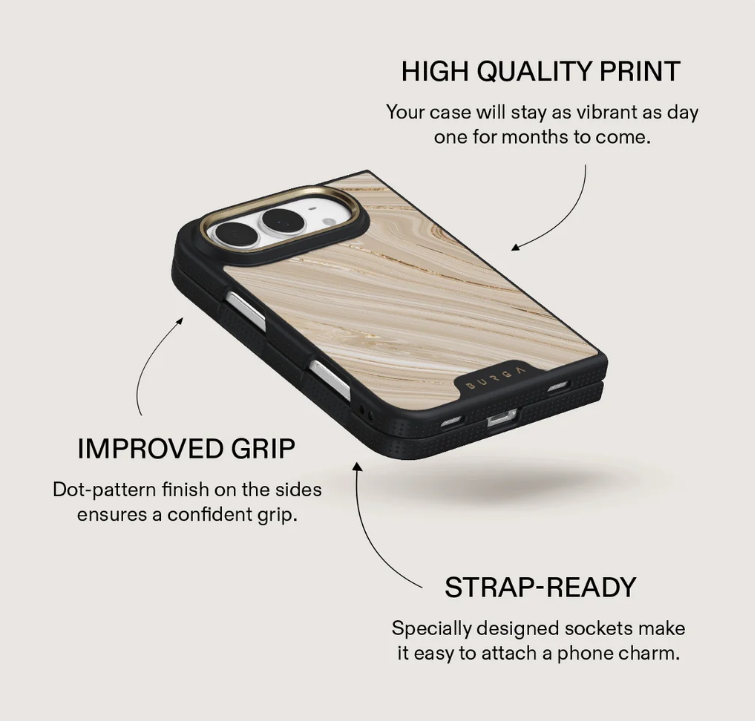
Full Glam combines a soft beige base with gold accents. The result is a restrained, polished look that offers more detail than a plain neutral case without relying on bright colors or elaborate graphics.
Its appeal lies in a familiar palette and subtle decorative elements. For shoppers who prefer understated accessories, those details may be more appealing than a bold print or high-contrast design.
What makes this variation distinctive
- A neutral beige base that complements a range of colors.
- Gold accents that introduce detail without overwhelming the design.
- An aesthetic positioned around understated elegance rather than playful or expressive styling.
What a small ecommerce store can learn
A variation doesn't need to look radically different to have a distinct audience. Small changes in color and finish can provide shoppers with meaningful alternatives.
If you sell a product in several colorways, give each option clear, accurate imagery and make the differences easy to compare. A buyer who wants a neutral accessory should be able to identify that option quickly without browsing every product in your catalogue.
2. BURGA Barely Yours: Appealing to Nature-Inspired Preferences
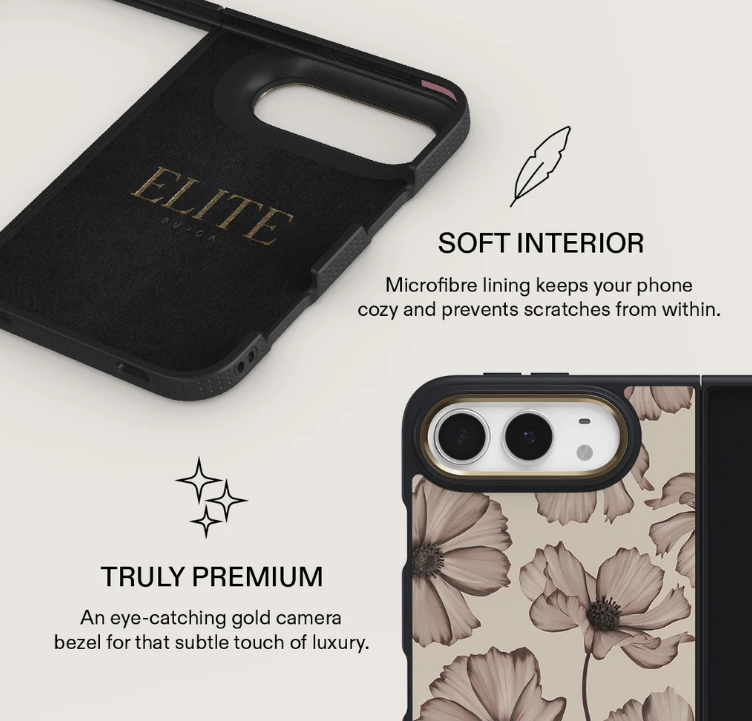
Barely Yours uses beige and brown tones with delicate botanical details. It offers more visual character than a solid neutral case while retaining a restrained color palette.
This design occupies a useful middle ground for shoppers who want a patterned accessory but don't necessarily want bright colors or large floral graphics.
What makes this variation distinctive
- Botanical details create a recognizable theme.
- Earthy colors keep the overall palette relatively subdued.
- The design provides a patterned alternative to plain neutral options.
What a small ecommerce store can learn
Customer preferences often exist along a spectrum. Some buyers want the simplest possible design, while others prefer a little more personality without moving towards something bold.
A small store can accommodate these differences through a limited set of carefully chosen variations. For example, a print-on-demand business might offer the same illustration in a plain, botanical, and more decorative treatment.
The goal is not to create a separate product for every imaginable preference. It is to identify a few meaningful differences that help shoppers find an option they like.
3. BURGA Navy Trench: Reaching Buyers Who Prefer Darker Designs
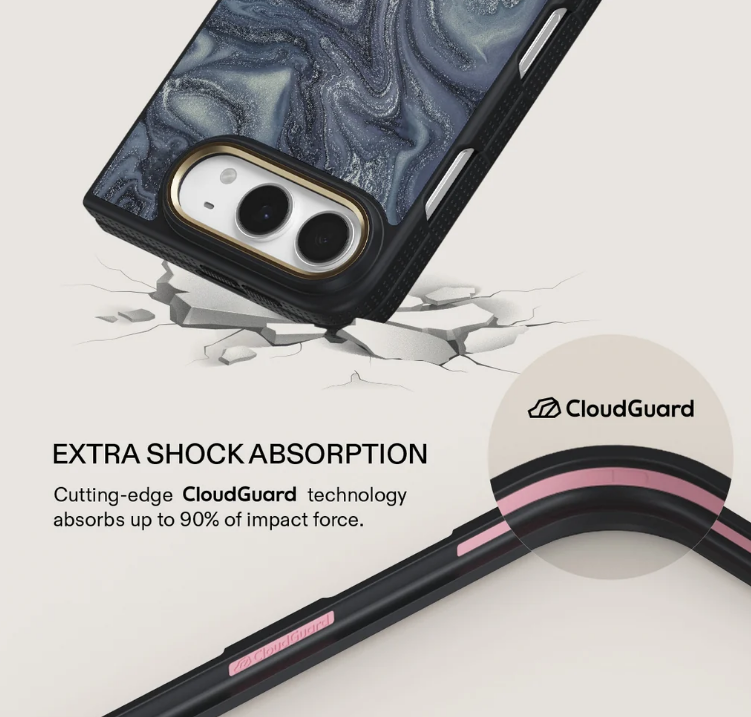
Navy Trench takes a different direction with its deep blue marble pattern. The darker palette distinguishes it from the beige and brown options, while the marble effect introduces texture beyond a solid-color finish.
For shoppers who prefer darker accessories, it offers a recognizable alternative within the same collection.
What makes this variation distinctive
- Deep navy tones create a darker visual identity.
- The marble pattern introduces texture and variation.
- The overall palette remains relatively restrained despite the pattern.
What a small ecommerce store can learn
Not every variation needs to introduce a completely new feature. A change in color palette or pattern can give an existing product a different identity.
For a bootstrapped store, this can be a useful starting point when a supplier already offers several options. Rather than immediately searching for more products, examine whether the available variations address different customer preferences.
Of course, a supplier offering ten colors doesn't mean all ten deserve equal attention. Prioritize options that fit your audience, are reliably available, and can be presented clearly.
4. BURGA Dark Cherry: Using Color as the Main Differentiator
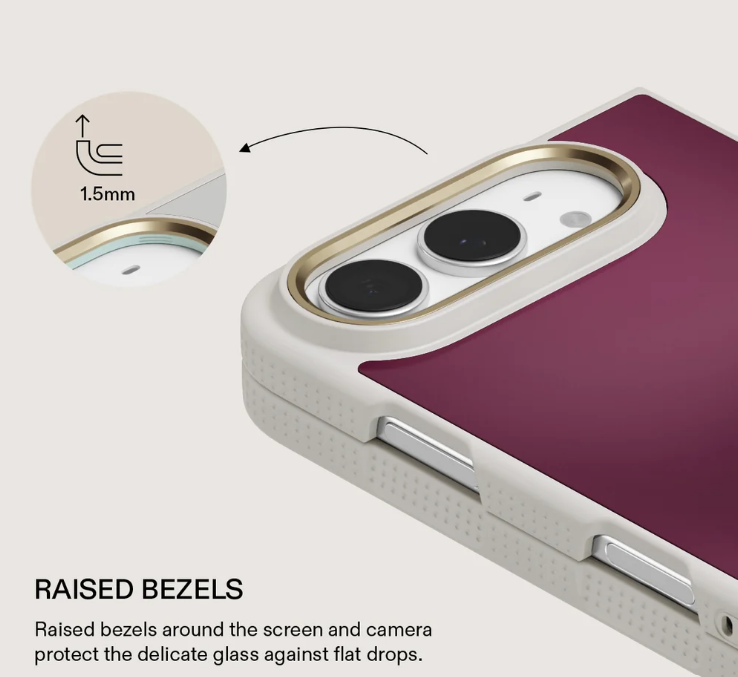
Dark Cherry takes a color-led approach, using rich burgundy tones rather than an elaborate pattern.
It demonstrates how a product can feel more expressive without requiring numerous additional visual elements. The shade itself does much of the work.
What makes this variation distinctive
- A rich burgundy palette that differs from conventional neutrals.
- A relatively simple composition in which color is the main feature.
- A more expressive alternative to beige, brown, and navy designs.
What a small ecommerce store can learn
When evaluating product variations, don't focus exclusively on features or complexity. Sometimes, a single attribute is enough to create a distinct option.
A candle brand, for example, might offer the same vessel in several finishes. A stationery store could sell the same notebook design in different cover colors. A home accessories business might offer a product in light and dark finishes.
These choices give customers more ways to find a suitable product without necessarily requiring a new underlying design.
5. BURGA Sorry Busy: Offering a More Playful Alternative
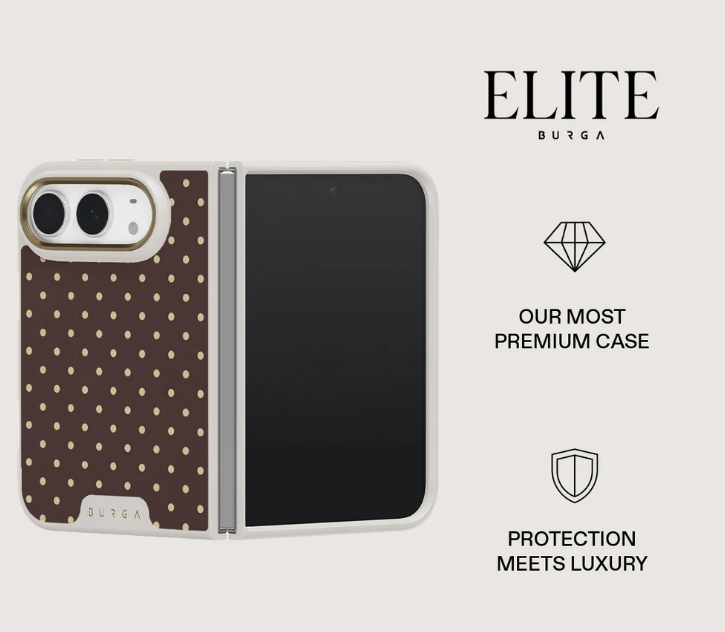
Sorry Busy uses a chocolate-and-cream polka-dot pattern. The repeating motif makes it more expressive than a solid-color design, while the limited palette keeps the overall look coordinated.
It offers another alternative within the same category, this time for shoppers who prefer a playful, retro-inspired aesthetic.
What makes this variation distinctive
- A recognizable polka-dot pattern.
- A two-tone chocolate-and-cream palette.
- A more playful visual identity than the collection's quieter designs.
What a small ecommerce store can learn
A product range can serve different preferences without losing its overall coherence. The individual options don't have to look identical; they need to remain understandable as part of the same product offering.
For example, a print-on-demand store could offer minimalist, illustrated, and retro-inspired versions of the same design. A dropshipping store might organize supplier-supported finishes into a few clear style categories.
This works best when each variation has a reason to exist and the differences are visible before customers have to make a purchase decision.
How to Apply Product Variation Strategy to Your Own Store
The BURGA designs illustrate different approaches to visual differentiation. But if you're running a small ecommerce business, the practical question is how to decide which variations to offer, how to organize them, and whether they're worth the effort.
You don't need a complicated product strategy to get started. A few focused decisions can help you test whether a wider range of options makes sense for your store.
1. Start with the customers you already attract
Before expanding your catalogue, look at the preferences and questions of your existing customers.
Reviews, support messages, product-page behavior, search queries, and customer feedback can reveal what buyers like, what they're looking for, and which options are missing from your current range.
If customers repeatedly ask for a different color, size, pattern, or bundle, that may be a useful signal. It isn't proof of demand on its own, but it gives you a concrete hypothesis to investigate.
For a new store without much customer data, begin with a small number of clearly differentiated options based on your chosen niche and available supplier offerings. Avoid assuming that every possible variation deserves a listing.
2. Use variations before adding unrelated products
Suppose you run a Shopify store selling desk accessories. Before introducing unrelated products, you might test a few finishes or bundles of the item that already attracts interest.
This keeps the experiment relatively focused. You're exploring whether a different presentation of a familiar product appeals to more customers, rather than simultaneously changing the product category, supplier, audience, and marketing strategy.
For dropshippers, verify that the supplier actually supports the required options and can fulfil them consistently. Check product quality, delivery estimates, stock availability, and the accuracy of the supplied images.
A variation that looks promising in a catalogue isn't useful if it cannot be delivered reliably.
3. Organize options around understandable preferences
Once you have several variations, make them easy to compare.
A shopper should be able to distinguish a neutral design from a botanical pattern or a darker marble finish without opening multiple pages and trying to work out what's different.
Depending on the product and platform, you might use:
- Clearly labelled color or pattern selectors.
- Product images that show each variation accurately.
- Collections organized around relevant styles or use cases.
- Comparison tables where differences in specifications matter.
- Bundles that group genuinely complementary products.
Shopify store owners can often handle basic variation selection through product variants and suitable themes or apps. More elaborate configurations may require additional setup, so keep the implementation proportionate to the size of the catalogue.
4. Make product pages do more of the selling
A customer should understand what they're buying without having to decode vague descriptions or guess which option suits them.
Use specific product names, clear photographs, accurate specifications, and concise explanations of relevant differences. If compatibility, dimensions, materials, or included accessories affect the purchase, make those details easy to find.
For a collection such as BURGA's iPhone Duo cases, the visual differences are central to the decision. Buyers still need to verify that a case fits their exact device and supports the features they intend to use.
This is especially important for lean teams. Better-organized product information can answer common questions before they become support requests, although the actual impact should be evaluated rather than assumed.
5. Test demand before expanding the range
A small store doesn't need to launch every possible variation at once.
Start with a manageable selection, then observe how customers respond. Depending on your store's traffic and sales volume, useful measures may include:
- Product-page views by variation.
- Add-to-cart rate.
- Conversion rate.
- Revenue and contribution margin by option.
- Returns, complaints, or support requests.
- Stock availability and fulfilment reliability.
Interpret the numbers carefully. A variation with more views may simply receive more prominent placement, while a higher conversion rate on a small number of visits may not be reliable evidence of stronger demand.
For very small stores, customer feedback and actual orders may be more informative than formal A/B tests until sufficient traffic is available.
The point is to make the next decision using evidence you can reasonably collect, rather than committing money and effort to a large catalogue expansion upfront.
6. Use bundles and complementary products selectively
Product variation isn't limited to changing the product itself. Bundles and matching accessories can provide another way to serve customers with different needs.
A shopper might prefer a single phone case, while another wants a coordinated set of accessories. A stationery buyer might need one notebook, whereas another wants a notebook and matching pen.
The opportunity is to make relevant combinations available without overwhelming customers with unnecessary add-ons.
For a bootstrapped store, start with products that are genuinely complementary and operationally practical to sell together. Check whether the bundle improves average order value and contribution margin after accounting for product costs, shipping, discounts, and fulfilment.
A larger basket isn't automatically a more profitable one.
Choosing the Right BURGA iPhone Duo Case
If you're shopping for a case rather than studying the ecommerce strategy, the five designs offer different starting points based on visual preference.
Design
Defining aesthetic
A good starting point if you prefer
Full Glam
Beige with gold accents
Understated elegance
Barely Yours
Beige and brown botanical pattern
Soft, nature-inspired styling
Navy Trench
Deep navy marble
Darker, classic designs
Dark Cherry
Rich burgundy tones
Color-led simplicity
Sorry Busy
Chocolate and cream polka dots
Playful, retro-inspired patterns
Beyond appearance, check that the case fits your exact device and offers the features you need.
Check construction and device compatibility
A case designed for a foldable phone must accommodate its particular construction. Confirm the exact device model listed on the product page rather than assuming a case for another iPhone will fit.
The original product information describes BURGA's iPhone Duo Elite cases as featuring a two-part construction, a slim profile, a matte finish, textured sides, and CloudGuard impact-absorption technology. Check the current specifications and any available supporting evidence before relying on specific protection claims.
Check compatibility with magnetic accessories
If you use magnetic chargers, wallets, or other accessories, verify that the specific case supports the compatibility you need.
The supplied product information describes BURGA's iPhone Duo Elite cases as MagSafe compatible. Confirm the details for your chosen case and intended accessories before ordering.
Review warranty and return policies
Check the manufacturer's current warranty, return window, and applicable conditions before buying. The original product information states a 12-month warranty and a 30-day return policy, subject to the published terms. Verify these details on BURGA's official website, as policies may change.
Frequently Asked Questions
How can small ecommerce businesses reach different customer segments without launching new products?
Start by identifying meaningful differences in customer preferences. Depending on the product, variations in color, pattern, size, finish, configuration, or bundles may serve those preferences without requiring an entirely new product category. Validate demand and check the operational costs before expanding.
Are product variations useful for dropshipping stores?
They can be, particularly when a supplier already offers suitable options for a product that fits the store's audience. However, dropshippers should verify availability, quality, fulfilment, shipping times, and product information before adding variations to their listings.
Should a Shopify store list every available product variation?
Not necessarily. Too many options can make a product harder to navigate and increase the work involved in maintaining listings. Start with variations that have a clear purpose, present them in an understandable way, and expand when customer demand or other evidence supports doing so.
Can changing product colors or patterns improve conversion rates?
It may help if the new options better match customer preferences, but the result isn't guaranteed. Track relevant metrics and account for differences in traffic, pricing, visibility, and availability before concluding that a particular variation performs better.
What is the difference between product variation and product differentiation?
Product variation refers to offering different versions of a product, such as different colors or patterns. Product differentiation is the broader strategy of making an offering meaningfully distinct from alternatives. Variations can contribute to differentiation, but the distinction might also come from functionality, service, quality, pricing, or the overall customer experience.
Conclusion: Expand Your Options Before Expanding Your Catalogue
For a solo founder or small ecommerce team, growth doesn't always require adding another product category. Sometimes, the more practical opportunity is to make an existing product relevant to more customers.
BURGA's five iPhone Duo case designs illustrate how color, patterns, and visual identity can create distinct options within a single category. Full Glam offers understated beige-and-gold styling, Barely Yours introduces botanical details, Navy Trench takes a darker marble-inspired direction, Dark Cherry emphasizes rich color, and Sorry Busy adds a playful polka-dot pattern.
For Shopify merchants, dropshippers, and bootstrapped ecommerce businesses, the lesson is to look for meaningful variations before committing to a broader catalogue. Start with customer preferences, choose options that are practical to fulfil, make the differences clear, and monitor how buyers respond.
The goal isn't to offer something for everyone. It's to give the right customers a clearer reason to choose what you already sell.