Creative and media strategy are two sides of the same coin in marketing. But many brands develop them in isolation.
Creative teams focus on messaging, visuals, and storytelling, while media teams concentrate on targeting, placements, budgets, and performance.
According to 2026 research highlighted by WARC, roughly half of marketers have entirely separate brand and performance teams, and only 8% believe their teams understand what it takes to deliver integrated advertising.
As a result of this gap between creative and media, even the best ads don’t reach the right audience, and precisely targeted campaigns fail to engage. Either way, businesses risk wasting ad spend and missing conversion opportunities.
Aligning creative and media strategy helps close this gap, ensuring that everything from campaign messaging to channel selection works toward the same goals.
Why Creative and Media Alignment Is Important
Creative and media alignment ensures the right message reaches the right audience through the right channels at the right time. When both strategies work together, brands can benefit in several ways:
- More relevant messaging and audience targeting: When creative and media teams share audience insights and goals, they can develop ads that address the specific needs, interests, and motivations of their target audience. This makes campaigns more relevant and increases the likelihood of meaningful engagement.
- Greater consistency across channels: Alignment ensures campaign messaging, visuals, and brand identity stay consistent across platforms while adapting to each channel's unique requirements. This helps reinforce brand recognition and creates a more cohesive customer experience.
- Better media efficiency and less wasted spend: Even the best media targeting can’t compensate for ineffective creative. For instance, a high-quality TV creative can generate 72% more incremental sales than average creative with the same budget, according to Kantar. That shows how strong creative can make existing media investments work harder.
- Faster testing and campaign optimization: When creative and media teams collaborate, they can quickly identify which messages, visuals, and formats perform best across specific audiences and placements. These insights can then guide creative improvements, as well as budget reallocations (doubling the impact).
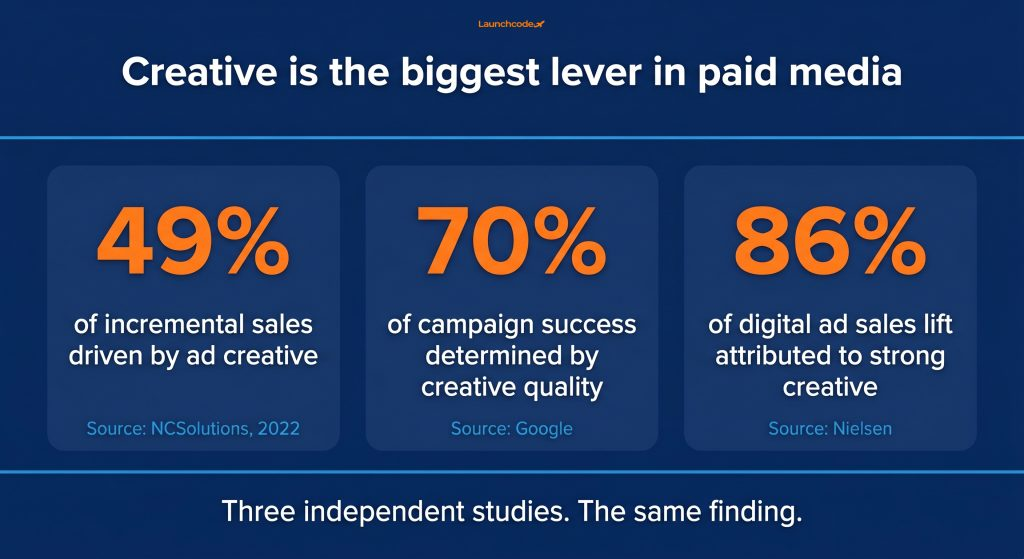
- Higher conversions and stronger ROI: Effective alignment helps maximize the combined impact of creative quality and media delivery, improving the potential for conversions and profitability. After all, studies show creative is the most important lever in paid media.
Ultimately, aligning creative and media strategy helps businesses get more value from both their creative production budgets and advertising investments.
How to Align Creative and Media Strategy for Better Campaign Performance
Aligning creative and media strategy requires a collaborative approach between the teams handling these key functions. That includes sharing goals, audience insights, performance data, and even the external partners they use.
Here are six practical ways to make that happen.
1. Establish Shared Campaign Goals and KPIs
The first step in aligning creative and media teams is to ensure that they’re essentially working toward the same business outcomes. That includes larger, longer-term brand goals as well as more immediate, specific campaign objectives.
For example, consider a B2B company launching a campaign to generate qualified leads. The creative team might focus on developing ads that highlight specific customer pain points and promote a downloadable industry report. Meanwhile, the media team could prioritize LinkedIn campaigns targeting relevant decision-makers and optimize for lead submissions.
In contrast, a campaign focused on building brand awareness might require more emotionally engaging creative, broader audience targeting, and reach-focused placements.
The key is to translate business objectives into shared creative and media KPIs. These could include:
- Brand awareness: Reach, impressions, brand lift, and ad recall.
- Engagement: Click-through rates, video completion rates, and engagement rates.
- Lead generation: Cost per lead, qualified leads, and lead-to-customer conversion rates.
- Sales: Cost per acquisition, conversion value, and return on ad spend (ROAS).
When both teams are accountable for the same outcomes, they're more likely to make decisions that improve overall campaign performance.
2. Build a Unified Understanding of the Audience
Creative teams need to know what motivates an audience, while media teams need to understand where and how to reach them.
Bringing these perspectives together can produce more relevant campaigns.
Start by combining insights from customer research, first-party data, past campaign performance, and advertising platform analytics.
Use this information to identify audience segments, their pain points, preferred channels, and the messages most likely to resonate.
Crucially, both teams should participate in campaign planning from the beginning.
3. Match Creative Messaging and Formats to Media Channels
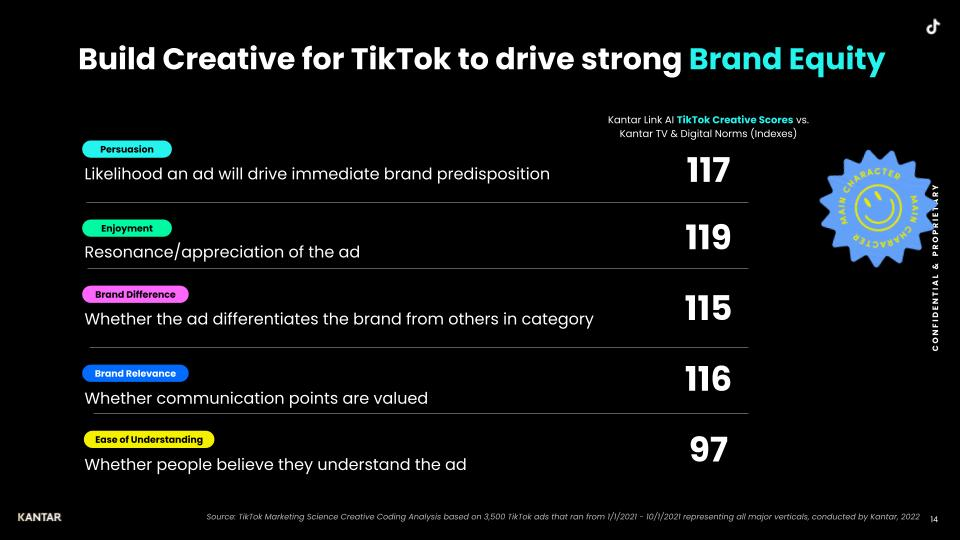
Platform-native creatives can outperform those used broadly across channels. TikTok’s own analysis found that TikTok-native creatives had 19% ad recall. On top of that, using creators in ads increased recall by 27%.
When the creative team knows which channel a campaign will run on, they can better adapt formats and strategies to that channel. This is where input from media strategists becomes important, as they typically call the shots on media channel selection and budget allocation.
In other words, media placement should influence creative execution from the beginning. Teams should plan for platform-specific formats, messaging, visuals, and calls to action.
Reusing the same assets across channels no longer cuts it and wastes ad spend.
4. Align Creative Production With Media Budgets and Campaign Requirements
Creative production and media planning should also align at the resource-allocation level. Otherwise, businesses risk investing heavily in assets that receive limited exposure or running campaigns without enough creative variations to sustain performance.
Suppose a retailer plans to invest 60% of its advertising budget in Meta, 25% in YouTube, and 15% in Google Display. Its creative production plan should reflect these priorities, with sufficient resources dedicated to developing and refreshing Meta assets while also supporting the format requirements of the other channels.
However, budget size isn't the only consideration. Teams should also account for audience segments, placements, creative variations, and testing requirements.
A practical approach is to work backward from the media plan to establish creative production requirements. This involves:
- Identifying the assets required for every advertising channel and placement.
- Prioritizing production based on planned media spend and campaign goals.
- Creating multiple variations for different audiences, messaging angles, and formats.
- Reserving production capacity for ongoing testing and creative refreshes.
- Coordinating production deadlines with campaign launch dates.
5. Work with Partners Who Cover Both Creative and Media
For brands that outsource part or most of the creative and media buying processes to an external agency, it makes sense to partner with one that covers both.
Instead of creating a bridge between one agency handling creative and one overseeing media, bring both capabilities under one roof to eliminate silos and communication gaps.
Many full-service agencies bring both creative and media capabilities together.
For example, Fieldtrip creative agency handles creative strategy and content production for campaigns across various channels. At the same time, the agency’s media wing oversees media planning and buying.
An integrated agency can help bridge the gap between creative decisions and media performance.
If a paid social campaign isn't converting, the media team can work directly with creative specialists to identify whether the problem lies in the messaging, format, targeting, or placement. They can then coordinate adjustments without lengthy back-and-forth communication between different vendors.
The potential benefits include faster decision-making, more consistent campaign messaging, streamlined workflows, and clearer accountability for performance.
6. Create a Shared Framework for Creative Testing and Optimization
Creative testing shouldn't happen independently of media optimization. Both teams need to collaborate to determine which creative elements perform best, with which audiences, and across which placements.
Develop a shared testing roadmap that covers different creative variables, such as hooks, headlines, visuals, messaging angles, formats, and calls to action.
The media team can then structure campaigns to gather meaningful performance data, while creative teams use those insights to develop stronger assets.
Armed with that insight, the creative team can develop additional convenience-focused variations, while the media team tests their performance across other audiences and placements.
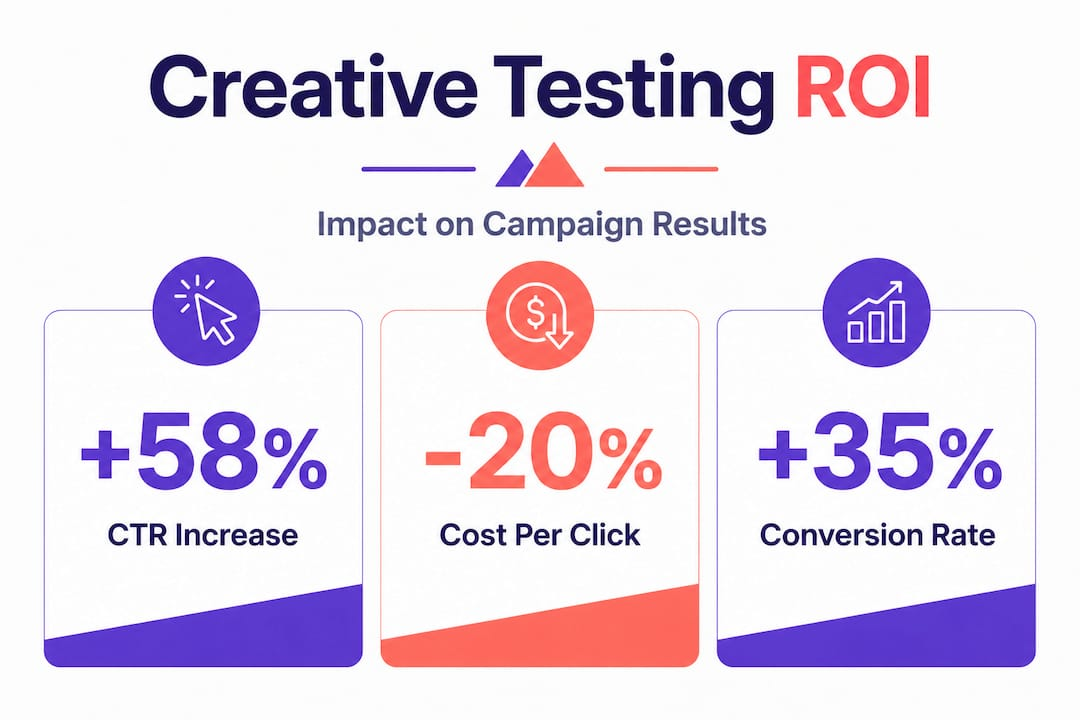
Major advertising platforms already support this approach. Google Ads, for instance, lets advertisers provide up to 15 headlines and four descriptions in a responsive search ad. The platform tests different combinations and learns which are most relevant to users' searches. Google reports that advertisers improving their responsive search ads' Ad Strength from Poor to Excellent see 15% more clicks and conversions on average.
Pro Tip: For reliable insights, use controlled experiments where possible. Don’t assume that every performance difference comes from the creative itself. Audience differences, placement costs, and delivery conditions can also influence results.
Common Challenges in Aligning Creative and Media Teams
Even when creative and media teams share the same objectives, aligning their efforts isn't always straightforward. Differences in priorities, workflows, and organizational structures can create obstacles that affect campaign execution.
Before you implement any of the suggestions above, you might want to tackle these challenges first:
Conflicting Priorities
Creative teams may prioritize brand storytelling, originality, and long-term brand building, while media teams may focus on immediate performance metrics like clicks, conversions, and ROAS.
These priorities aren't necessarily incompatible, but they can create friction when making campaign decisions.
Brands should balance short-term performance with long-term brand objectives, ensuring neither is consistently sacrificed for the other.
Plus, sharing KPIs for a campaign run can help align priorities, so both teams have their eye on the same prize.
Different Planning and Production Timelines
Media campaigns can be adjusted almost instantly, but producing new creative assets may require days or weeks of scripting, design, filming, and approvals. This mismatch can make it difficult to respond quickly to performance insights.
Make sure the media buying team understands and follows the creative team's production timelines and plans accordingly.
Flexible production schedules and a library of adaptable creative assets can also help bridge the gap.
Fragmented Technology and Data
Creative teams may use asset management and production tools, while media teams rely on advertising platforms, analytics software, and reporting dashboards.
When these systems don't communicate effectively, connecting individual creative assets to campaign performance becomes difficult.
Creative teams don’t necessarily need execution access to advertising or analytics platforms, but they should have visibility into performance data. That way, media performance can inform creative strategy.
Consistent asset naming conventions can also improve visibility across both functions.
Unclear Decision-Making Authority
When a campaign underperforms, disagreements can arise over whether to revise the creative, adjust targeting, or change budget allocations. Without clearly defined decision-making responsibilities, these discussions can delay optimization.
Establish approval processes and escalation procedures to help teams resolve disagreements without slowing campaign execution.
Always turn to data as the source of truth to pinpoint what actually caused poor performance and relegate those findings to the appropriate team, so they can fine-tune their strategy.
Creative and Media Alignment Checklist
Before launching your next campaign, go through this checklist to see whether your media and creative teams and their strategies are working toward the same goal.
- Have creative and media teams agreed on the campaign goals and KPIs?
- Are creative and media decisions informed by the same audience research and insights?
- Have both teams contributed to developing a unified campaign brief?
- Are creative assets tailored to the selected advertising platforms and placements?
- Does the creative production plan account for media budgets, timelines, and asset requirements?
- Have both teams agreed on a framework for creative testing and media optimization?
- Are campaign performance insights accessible to both teams through shared reporting?
- Is there a clear process for communicating results and implementing campaign improvements?
Better Alignment, Better Campaign Performance
Creative and media strategy may be two distinct functions, but they should be in tune at all times. That starts with consistent communication and feedback.
From planning through post-campaign analysis, creative and media teams should share information, ideas, and tools. In fact, it helps to have a dedicated point of contact in each team or department. Those points of contact can then communicate consistently.
Again, great creative needs effective media planning to reach the right people, while even the most sophisticated targeting strategy will struggle to deliver results if the messaging fails to resonate with its audience.
And whether you're managing campaigns in-house or working with external partners, stronger alignment means every creative asset and media investment contributes to the same business objectives.
FAQs
What is the difference between creative strategy and media strategy?
Creative strategy determines what an advertising campaign communicates and how it communicates it, including messaging, visuals, storytelling, and calls to action. Media strategy focuses on where, when, and to whom those messages are delivered, including channel selection, audience targeting, placements, budgets, and campaign scheduling.
Which comes first: creative strategy or media strategy?
Ideally, develop both strategies together, starting with shared campaign objectives and audience insights. If media requirements (based on past performance or specific business needs) influence creative development, media strategy comes first.
How can creative and media teams collaborate more effectively?
Teams can improve collaboration through joint campaign planning, unified creative briefs, shared KPIs, and regular performance reviews. Centralized reporting dashboards and clear feedback processes also ensure that media performance insights inform creative development, and vice versa.
How does creative and media alignment improve advertising ROI?
Alignment helps businesses reduce wasted ad spend by ensuring creative messaging matches the audiences and placements being targeted. It also enables more effective testing, faster optimization, and better budget allocation, all of which can drive stronger conversion rates and ROI.